Services / AWS and GCP cloud implementation
Services / Cloud implementation
AWS and GCP cloud implementation
Using the cloud is only the start. We design it as a platform that helps your business grow. Our work covers designing and building environments with AI and data in mind, migrating existing systems, and ongoing operations and optimization. We build cloud platforms that are secure, scalable, and easy to operate.
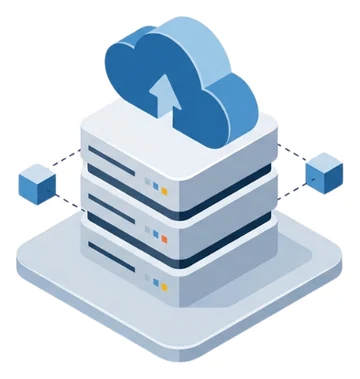
We handle planning, design, build, operations, and optimization end to end. Projects range from moving off on-premises servers to launching new services and overhauling existing systems.
Sound familiar?
You moved to the cloud, yet nothing got faster or cheaper
Stalled cloud migration
The move off on-premises servers isn’t progressing, so the business can’t speed up. It’s unclear where to start.
Unoptimized cloud costs
Cloud bills keep rising, but you can’t see where the waste is or how to fix it.
Scalability limits
Your infrastructure can’t keep up as users grow and services expand. Every busy season needs another stopgap fix.
Security and operations concerns
Production is already running before cloud-specific security and monitoring are in place.
A common problemPress a button below to see each stage
A common problem is a patchwork system. Servers are scattered, and you keep paying for capacity you don’t use.
Cloud adoption consulting is like sorting your things before a move. We decide up front what to move, in what order, and what stays where it is.
Architecture design is the blueprint drawn before building a house. We first decide what to prioritize: availability (keeping systems running), security, or cost. Then we draw the shape of the four layers.
Build and automation is writing a recipe for your environment. Settings are kept as code, so the same environment can be rebuilt any number of times. Checks and releases run automatically.
Operations and optimization are the regular inspections after the house is built. We watch how everything runs, then find and cut what isn’t being used.
This is a conceptual diagram.
What we offer
We don’t stop at the build
We work in four phases, and you can start with any of them. If your environment is already running, we can take over only its operations and optimization.
Each phase ends with a concrete deliverable for you to keep.
The cards are illustrations of the deliverables, not the actual documents.
-
01 Cloud adoption consulting
We review your current systems and how they are run. Then we decide how to use AWS or Google Cloud, and what to move in what order. Every recommendation comes with its reasons, even when the answer is not to migrate.
- Map current systems and operations
- Plan cloud use and migration order
- Show what not to move
Deliverable previewMigration strategy and roadmap -
02 Cloud architecture design
We weigh availability, security, and cost side by side, then decide the architecture. Keeping systems running nonstop and keeping costs low don’t always go together, so we agree on priorities with you in advance.
- Compare the three factors
- Finalize the architecture
Deliverable previewArchitecture design document -
03 Build and automation
We build your environment with IaCInfrastructure as code: a way to set up servers and other resources from configuration files, not by hand. You can then rebuild the same environment any number of times., using tools such as Terraform. This lets us recreate the same environment any number of times. We also set up CI/CDContinuous integration and continuous delivery: a setup that tests and releases the code you write automatically. Less waiting for manual checks means small changes can ship often., so changes made after the build never go back to manual work.
- Set up CI/CD
- Release small changes often
Deliverable previewIaC code and built environment -
04 Operations and optimization
We design how your systems are operated, set up monitoring, and keep handling incidents and reviewing costs. On a regular schedule, we find unused resources and oversized setups and report them to you.
- Set up monitoring
- Keep handling incidents
- Find idle resources
Deliverable previewOperations design and monitoring setup
 Kubernetes
Design approach
We get each layer right, from the bottom up
A cloud setup is built layer by layer. The base is account design, plus network and security. The later you fix these, the more it costs and the longer your systems are down, so we settle them first. Then we add the runtime platform, followed by the applications. IaC, monitoring, and operations apply to every layer.
Repeatable setupsTerraformIaC
 Amazon EKSContainers
 AWS LambdaServerless
 Amazon RDSDatabase
 GKEContainers
 Cloud RunServerless
 Cloud SQLDatabase
 Amazon VPCNetwork
 AWS IAMPermissions
 AWS CloudTrailActivity log
 VPCNetwork
 IAMPermissions
 Cloud Audit LogsActivity log
 AWS OrganizationsAccount management
 Resource ManagerAccount management
Ongoing cost reviews
 CloudWatchMonitoring
 Cloud MonitoringMonitoring
Strengths
What sets us apart: we look beyond infrastructure
A full-stack team that connects apps and infrastructure
We treat your cloud platform and application development as one, and design and build them together. Optimizing only the infrastructure has limited effect if the app itself stays the same. That’s why one NAL team covers both.
Japanese quality standards, from consulting to operations
Your point of contact is a product ownerThe role that decides what to build and sets priorities. As your point of contact, the PO takes in your requests and passes them to the development team. who graduated from a Japanese university and understands the culture and quality standards of Japanese companies. Your contact and the development team work as one unit. This means your requests reach the developers accurately, and every phase keeps to Japanese quality standards.
Design tied to business challenges
Setting up servers is never the goal in itself. We choose the architecture based on time to market and return on investment.
Flexible engagement models
Choose what fits your business stage, from a one-off project to a team that keeps working with you.
What you can expect
What changes once your cloud is in order?
Faster time to release
IaCInfrastructure as code: a way to set up servers and other resources from configuration files, not by hand. You can then rebuild the same environment any number of times. automates environment setup, so each cycle from development to release gets shorter. You also lose less time waiting for environments.
Reworked cost structure
We shift more of what you used to pay as fixed costs toward paying only for what you use. Ongoing monitoring keeps waste from creeping back.
Built to handle growth
When users or data grow, your setup can cope without a major rebuild. It also becomes easier to add AI and data capabilities later.
Less downtime
We build monitoring and recovery procedures into the design. This cuts the time your business is down because of infrastructure problems.
How we approach cost structure
Switch between Current and Optimized to compare how the cost breakdown changes.
This is a conceptual diagram. How much you can save depends on your setup and usage.
AI in software development
We also improve how development works on the cloud
We use AI to make software development itself more efficient and standardized.
See AVATAR CODING- AI coding
- AI code reviewA second read of code before release, to find mistakes and parts that are hard to read.
- AI test generation
- AI document generation
- AI agentsA setup where AI takes instructions from a person and works through tasks such as researching, building, and checking, one by one.
Certifications and partners
Checked against third-party standards
AWS Select Tier Services Partner
NAL became an AWS Select Tier Services Partner in March 2023. AWS recognizes us as a provider of migration support and operations built on AWS services.
ISO 9001
The international standard for quality management systems. Our procedures and record keeping have passed a third-party audit.
ISO/IEC 27001
The international standard for information security management systems. We are certified for how we handle client information.
Technologies
What we’ve worked with
 Terraform
These are typical examples. If your environment isn’t listed, start by telling us about your current setup.
Frequently asked questions
Questions clients often ask before contacting us
Yes. We first review your current setup and operating procedures. Then we agree with you on the handover scope and team before we start.
It depends on your current systems, your in-house operations team, and the services you want to use. We compare them during cloud adoption consulting and give you our recommendation with the reasons.
It varies widely with your current setup and how you use it, so we don’t give a standard figure. After reviewing your current usage, we show you where costs can come down and by roughly how much.
It depends on how the switchover is done. If you can’t afford downtime, we design a setup that runs the old and new systems in parallel before switching. We first ask how much downtime is acceptable, then choose the approach.